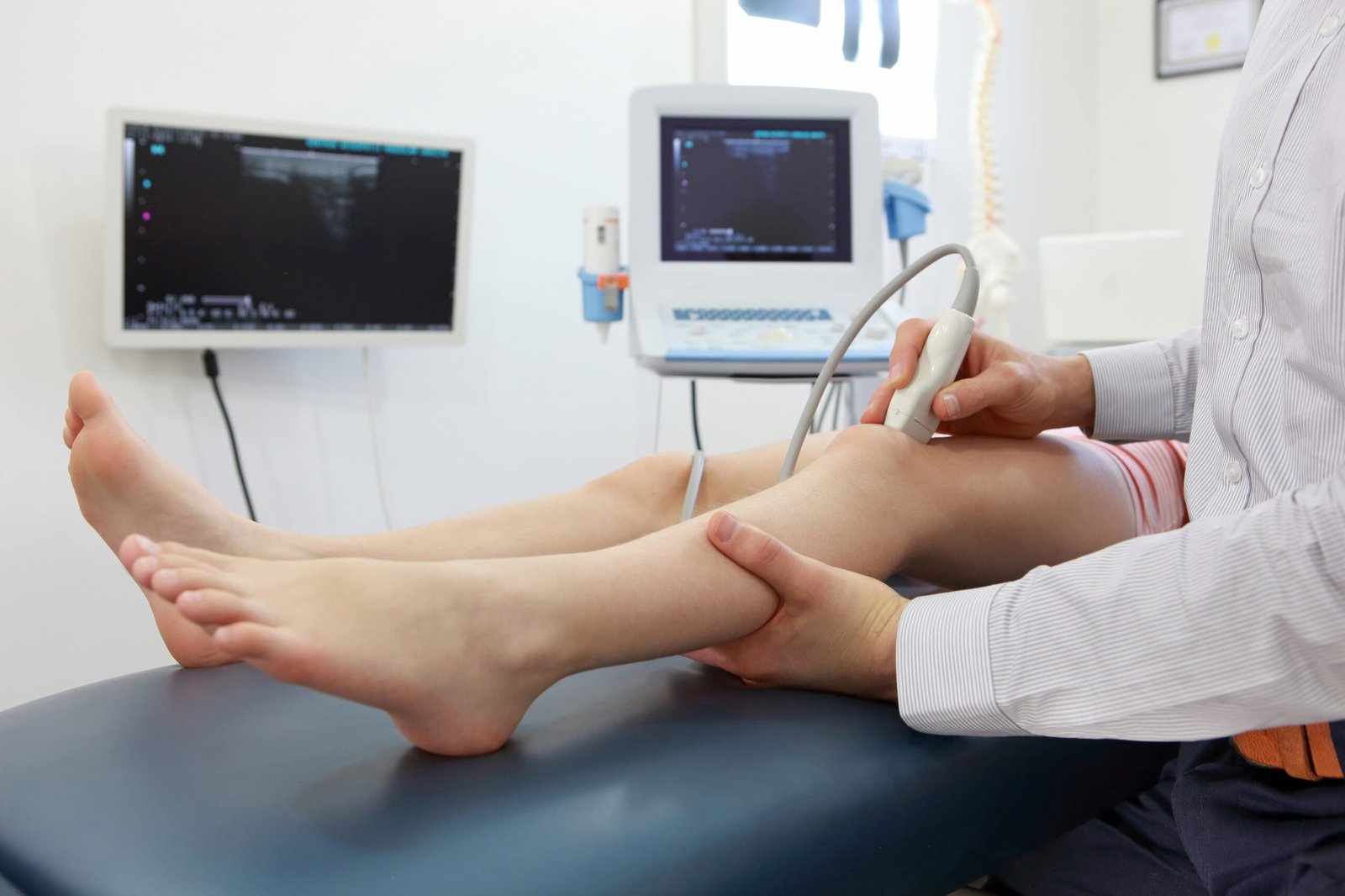
Are ultrasound-guided injections better than traditional injections?
Ultrasound-guided injections allow clinicians to visualise muscles, tendons, ligaments and joints in real time, helping deliver medication precisely to the intended area. Traditional (landmark-based) injections rely on anatomical landmarks and clinical experience without live imaging. The most appropriate approach depends on the condition, anatomy and the clinician’s assessment.
Introduction
When joint pain or a sports injury affects your daily life, injection therapy may be recommended to reduce pain and improve movement. One of the most common questions patients ask is:
“Are ultrasound-guided injections better than traditional injections?”
The answer depends on your condition, but ultrasound guidance enables clinicians to see the structures beneath the skin in real time while performing the injection. This can help improve precision, particularly when treating small joints, tendons or complex anatomical areas.
In this guide, we’ll explain the differences between ultrasound-guided and traditional injections, their benefits, potential limitations, and when each approach may be appropriate.
What Are Ultrasound-Guided Injections?
Ultrasound-guided injections use live ultrasound imaging to help the clinician visualise:
- Muscles
- Tendons
- Ligaments
- Bursa
- Nerves
- Blood vessels
- Joint spaces
This allows the clinician to guide the needle while observing its position throughout the procedure.
Ultrasound guidance may be used for corticosteroid injections, PRP injections, hydrodilatation and other musculoskeletal procedures where accurate placement is important.
What Are Traditional (Landmark-Based) Injections?
Traditional injections are performed using external anatomical landmarks and clinical assessment without live imaging.
Experienced clinicians can successfully perform many landmark-guided injections, particularly in larger joints or where anatomical landmarks are easy to identify. However, in some situations, visual guidance may provide additional confidence regarding needle placement.
Key Differences Between Ultrasound-Guided and Traditional Injections
| Ultrasound-Guided | Traditional (Landmark-Based) |
| Live imaging during the procedure | No live imaging |
| Visualises muscles, tendons and joints | Relies on anatomical landmarks |
| Needle can be monitored in real time | Needle path is not visualised |
| Helpful for complex anatomy and small joints | Often suitable for straightforward injections in larger joints |
| May help avoid nearby nerves and blood vessels | Depends on anatomical assessment and clinician experience |
Why Accuracy Matters
The goal of any injection is to deliver treatment to the intended target.
For some conditions, accurate placement may improve the likelihood that medication reaches the affected structure. Ultrasound guidance can also help identify anatomical variations or nearby structures that should be avoided.
Accuracy is particularly valuable for:
- Small joints
- Tendon disorders
- Bursitis
- Deep structures
- Complex shoulder conditions
- Hip injections
- Plantar fascia injections
Clinical outcomes vary, and treatment success depends on multiple factors, including diagnosis and overall management.
Benefits of Ultrasound-Guided Injections
Potential benefits include:
- Real-time visual guidance
- Precise needle placement
- Assessment of surrounding soft tissues
- Ability to identify inflammation or fluid collections
- May reduce the need for repeated needle repositioning
- Useful in complex anatomical areas
- Can support personalised treatment planning
When Are Traditional Injections Appropriate?
Traditional injections remain an established treatment option and may be appropriate for:
- Some larger joints
- Straightforward clinical presentations
- Situations where imaging is not required
- Patients whose clinician determines that landmark guidance is suitable
The choice should always be based on clinical judgement and the patient’s individual needs.
Conditions Commonly Treated with Ultrasound-Guided Injections
Ultrasound guidance may be used when treating:
- Knee osteoarthritis
- Frozen shoulder
- Rotator cuff tendinopathy
- Tennis elbow
- Golfer’s elbow
- Hip bursitis
- Plantar fasciitis
- Achilles tendinopathy
- Trigger finger
- De Quervain’s tenosynovitis
- Shoulder bursitis
- Wrist pain
- Ankle pain
- Sports injuries
What Happens During the Procedure?
A typical appointment includes:
- Clinical assessment
- Review of symptoms
- Ultrasound examination (where indicated)
- Skin preparation
- Real-time ultrasound-guided injection
- Short observation period
- Aftercare advice
Most patients can return home shortly afterwards.
Recovery After an Ultrasound-Guided Injection
Recovery depends on the medication used and the condition being treated.
General advice may include:
- Rest the treated area for 24–48 hours.
- Avoid strenuous activity for a few days.
- Follow your clinician’s rehabilitation plan.
- Attend follow-up appointments if recommended.
Are Ultrasound-Guided Injections Safe?
Ultrasound-guided injections are widely used in musculoskeletal medicine. As with any medical procedure, there are potential risks, including:
- Temporary discomfort
- Bruising
- Mild swelling
- Infection (rare)
- Bleeding (rare)
- Temporary increase in pain
Your clinician will discuss the benefits and potential risks before treatment.
Who May Benefit Most?
You may benefit from an ultrasound-guided injection if you have:
- Persistent joint pain
- Tendon injuries
- Sports injuries
- Shoulder pain
- Hip pain
- Knee arthritis
- Chronic inflammation
- Pain that has not improved with conservative treatment
A specialist assessment is needed to determine the most appropriate treatment.
Frequently Asked Questions
Are ultrasound-guided injections more accurate than traditional injections?
Ultrasound guidance allows clinicians to see the needle and surrounding anatomy in real time, which can improve placement accuracy for many procedures.
Do ultrasound-guided injections hurt?
Most patients experience only mild discomfort. Local anaesthetic may be used where appropriate.
Are ultrasound-guided injections safer?
Real-time imaging helps clinicians visualise nearby structures, although every procedure carries potential risks. Your clinician will discuss these with you.
Which conditions benefit most from ultrasound-guided injections?
They are commonly used for tendon injuries, shoulder pain, hip pain, bursitis, plantar fasciitis and knee osteoarthritis, among other musculoskeletal conditions.
Are traditional injections still effective?
Yes. Landmark-guided injections remain an established option and may be appropriate depending on the condition, anatomy and the clinician’s assessment.
How long does the procedure take?
Most appointments are completed within 20 to 45 minutes, depending on the assessment and treatment required.
Can I drive home afterwards?
Many patients can drive home, but this depends on the treatment performed and the area injected. Follow your clinician’s advice.
How long does it take to recover?
Many people resume normal daily activities within one or two days, although recovery varies depending on the condition and treatment.
Conclusion
Choosing between an ultrasound-guided injection and a traditional landmark-based injection depends on your diagnosis, the joint or soft tissue being treated, and your clinician’s assessment. While both approaches have an important role in musculoskeletal care, ultrasound guidance provides real-time visualisation that can help improve precision in many procedures, particularly when treating tendons, smaller joints or more complex anatomical areas.
At Krida, our experienced musculoskeletal specialists use advanced ultrasound technology to assess joints, muscles and soft tissues before performing ultrasound-guided injections where clinically appropriate. Every patient receives an individual assessment to determine the most suitable treatment plan based on their symptoms, diagnosis and goals.
If you’re experiencing persistent joint pain or a sports injury, book a consultation with Krida to explore whether an ultrasound-guided injection is the right treatment option for you.